
Cold Chain Compliance Requirements for Food Transport in Australia
If you run a refrigerated transport operation in Australia, cold chain compliance is not optional. It is both a legal requirement and a food safety obligation, but it is also something your clients and retail partners will ask you to prove on paper.
However for many fleet operators, the specifics are murky. What exactly are you required to do? What records do you need to keep? And what technology actually helps you stay compliant without drowning in paperwork?
This guide breaks it all down in plain terms.
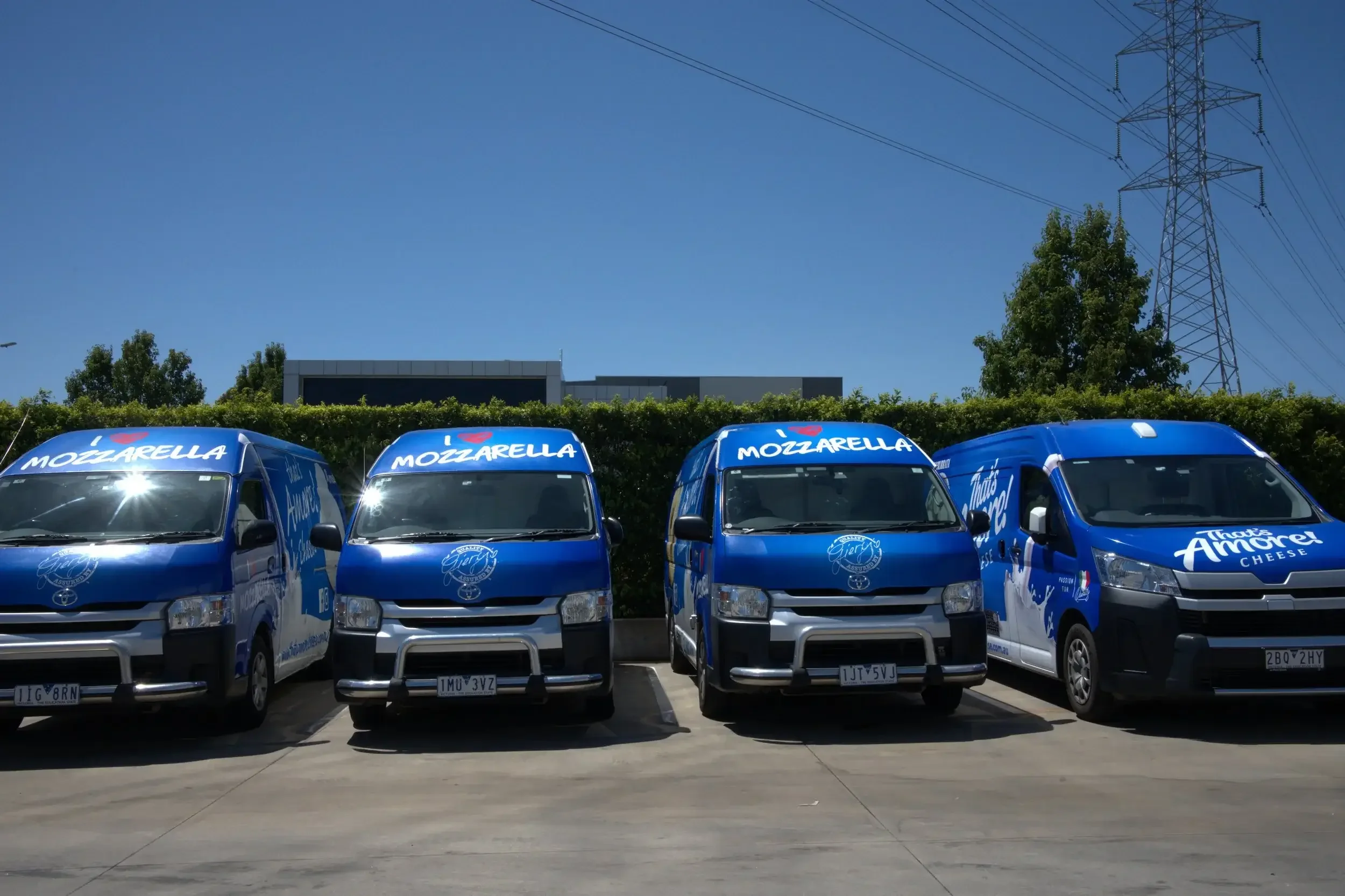
A line of refrigerated trucks from That's Amore Cheese parked in a row, representing a cold chain transport fleet.
What is cold chain compliance?
Cold chain compliance refers to the process of maintaining and documenting temperature control throughout the entire journey of temperature-sensitive goods, from the point of manufacture and storage through to delivery.
For food transport businesses in Australia, this means keeping perishable goods within specified temperature ranges at every stage of the supply chain, and being able to prove it.
A cold chain is only as strong as its weakest link. One temperature excursion during transport can not only compromise an entire consignment but also expose your business to legal liability, and damage your relationship with clients.
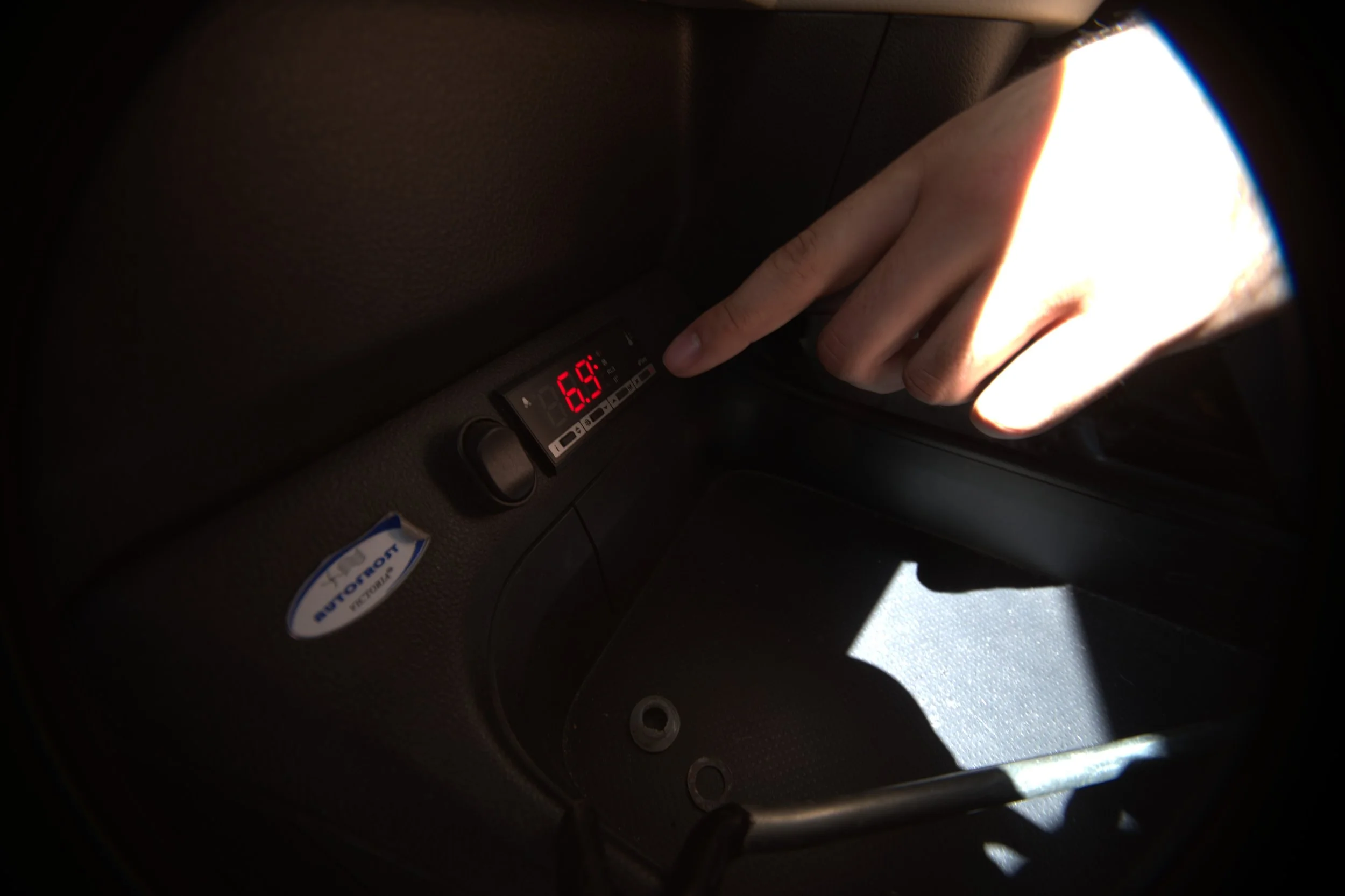
A technician pointing to an installed Vision Trak temperature monitoring device displaying a live reading of 6.9 degrees Celsius inside a refrigerated vehicle.
The Australian regulatory framework
Cold chain compliance in Australia is governed by several overlapping standards and regulations. The key ones for food transport operators are:
Australia New Zealand Food Standards Code
Food Standard 3.2.2 under the Australia New Zealand Food Standards Code sets out requirements for food businesses to maintain safe temperatures during storage and transport. It requires that potentially hazardous foods are kept at 5 degrees Celsius or below, otherwise 60 degrees Celsius or above for hot foods.
HACCP (Hazard Analysis and Critical Control Points)
HACCP is the internationally recognised food safety management framework and is widely adopted across the Australian food industry. Implementing a HACCP plan, means identifying where temperature risks can occur during transit and allows for transport operators to put in place the necessary controls to prevent these risks while keeping organised records that demonstrate that the controls are working.
Many of the major supermarket chains and food manufacturers in Australia will now only work with transport providers who have a documented HACCP plan in place. It has moved from being a best practice to a commercial necessity.
Safe Food Australia
Safe Food Australia is the guide published by Food Standards Australia New Zealand that helps businesses interpret and apply the Food Standards Code. It provides practical guidance on temperature requirements, record keeping, and what constitutes an acceptable food safety management system for transport businesses.
State and territory food safety legislation
Each state and territory also has its own food safety legislation that sits alongside the national standards. In Victoria for example, the Food Act 1984 requires food transport businesses to be registered and to comply with the Food Standards Code. Similar requirements exist in every other state. It is worth checking with your local council or state food authority for the specific obligations that apply to your business.
Temperature requirements for common food categories
While the general rule is to keep potentially hazardous food at 5 degrees Celsius or below, different food categories have specific requirements:
• Fresh meat and poultry: 0 to 4 degrees Celsius during transport
• Seafood and fish: 0 to 4 degrees Celsius, ideally transported on ice
• Dairy products: 5 degrees Celsius or below
• Cooked and ready-to-eat foods: 5 degrees Celsius or below
• Frozen goods: -15 to -18 degrees Celsius or below
• Pharmaceutical products: Typically 2 to 8 degrees Celsius, varies by product
These are the starting points. However when transporting goods with specific client requirements or export obligations, stricter temperature bands may be imposed more than the national standard.
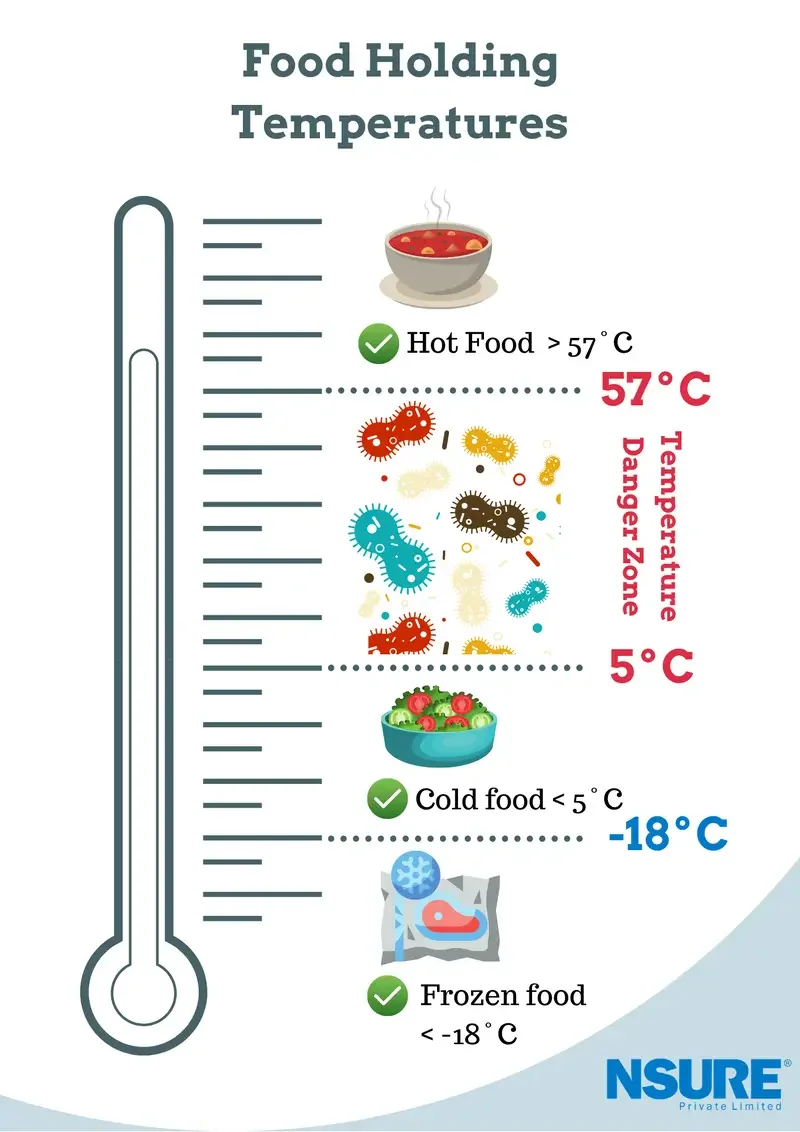
A reference chart showing safe temperature holding ranges for different food categories, indicating which temperatures are safe for chilled, frozen, and hot food transport.
What records do you actually need to keep?
This is where many operators fall short. Good intentions at the vehicle level mean nothing if you cannot produce evidence during an audit or after a complaint. At a minimum, your records should include:
• Temperature readings taken at regular intervals during each journey, ideally continuous logs rather than spot checks.
• The time and date of each reading.
• The vehicle or asset ID with relevant readings.
• Any temperature excursions that occurred, what caused them, and what corrective action was taken.
• Pre-trip checks confirming the refrigeration unit was functioning before loading.
• Records of refrigeration unit maintenance and calibration.
Manual paper-based systems can technically meet these requirements, but they are time-consuming, prone to gaps, and difficult to retrieve during an audit. Automated temperature monitoring systems that log data continuously and generate exportable reports are now the practical standard for any serious operation.
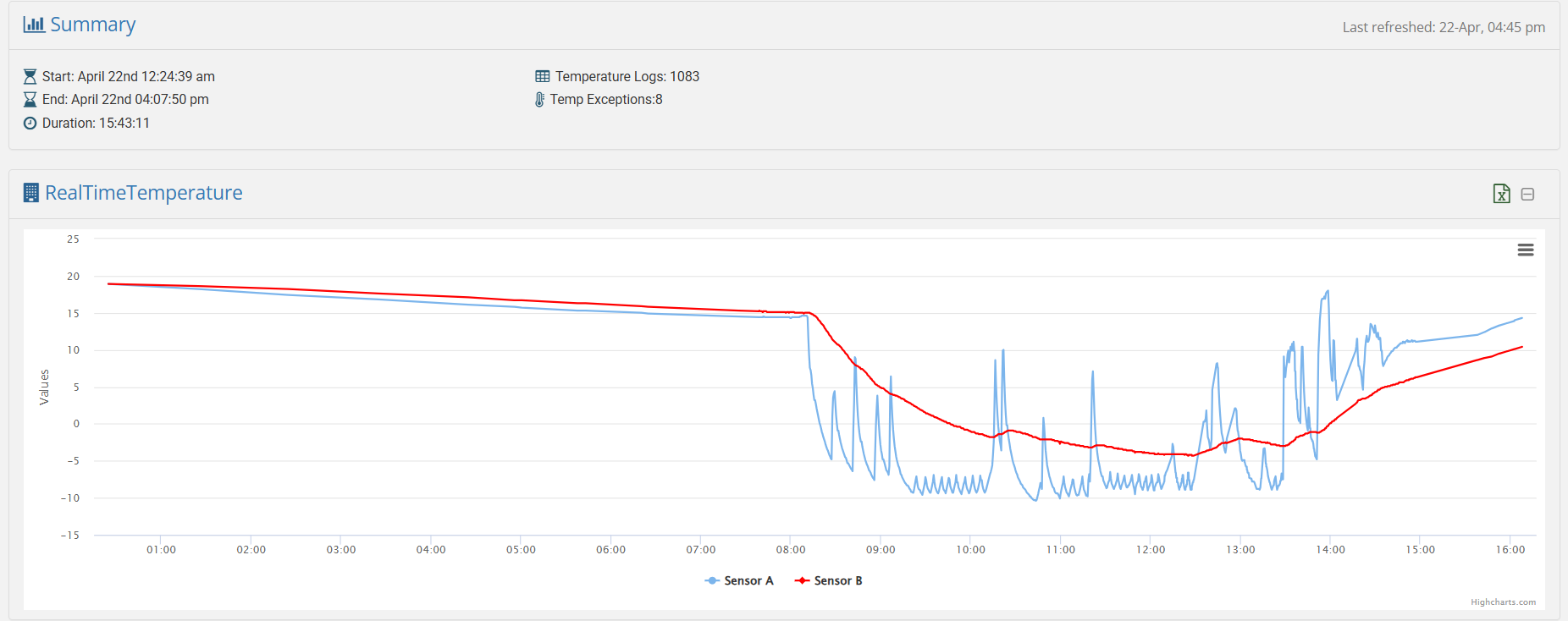
A Vision Trak platform screenshot showing a temperature log chart with continuous readings over time, demonstrating the kind of audit-ready data the system generates.
How technology makes cold chain compliance manageable
Modern cold chain monitoring technology has made compliance significantly less burdensome for fleet operators. Here is what a good system should do for you.
Continuous automated logging
Rather than relying on drivers to record temperatures manually, a monitoring system captures readings automatically throughout each journey. At Vision Trak, our temperature sensors log data every 30 seconds while the ignition is on, giving you a complete, unbroken record for every trip.
Real-time alerts
When a temperature drifts outside the acceptable range, you and your team receive an immediate alert. This means you can respond before the cargo is compromised rather than discovering the problem at the delivery point. Early intervention is everything in cold chain management.
Audit-ready reports
Good temperature monitoring software lets you generate a daily temperature report for any vehicle at any time. When a food safety auditor asks for records from the last six months, you can produce them in minutes rather than spending hours sifting through a folder of handwritten logs.
Combined GPS and temperature tracking
The most useful systems combine GPS location data with temperature readings so you can see exactly where a vehicle was at the moment any temperature event occurred. This level of detail is valuable both for compliance purposes and for investigating incidents when something goes wrong.
Common cold chain compliance failures and how to avoid them
Most compliance failures in refrigerated transport come down to a handful of recurring issues:
• Inadequate pre-trip checks: Refrigeration units that are not pre-cooled before loading, or units with undetected faults, are one of the most common causes of temperature excursions. A pre-trip checklist completed before every departure catches problems before they become expensive.
• Door opening during transit: Every time a delivery door is opened, warm air enters the cargo area. Minimising door open time and using multi-temperature compartment systems for mixed loads reduces this risk significantly.
• Poor record keeping: As mentioned above, having temperature control but not being able to prove it, is nearly as bad as not having it at all. Automated logging removes the human error from this process.
• Equipment maintenance gaps: Refrigeration units need regular servicing. A unit that has not been maintained is a compliance risk waiting to happen. Linking your maintenance schedule to your fleet management system keeps everything on track.
• Lack of driver training: Drivers are on the front line of cold chain compliance. They need to understand why temperature control matters, what they should do if a fault occurs, and how to complete pre-trip checks properly.
What to look for in a cold chain monitoring solution
If you are evaluating temperature monitoring systems for your fleet, here are the questions worth asking:
• Does it log continuously or just at intervals? Continuous logging provides a complete record and is more defensible during an audit.
• Does it send real-time alerts when thresholds are breached?
• Can it monitor multiple temperature zones in the same vehicle?
• How easy is it to generate and export compliance reports?
• Does it integrate GPS tracking, so you have location data alongside temperature readings?
• Is there a mobile app so your team can monitor the fleet from anywhere?
• What does the support for Australian operators look like? Finding local support that understands your regulatory environment is a real advantage.